
In constructing a safe and long-lasting building, the TMT bars are among the most important materials. TMT bars give the structure that holds up your entire building. Yet even the highest-quality TMT bars can become inferior and less effective if improperly stored and handled at the construction site. Let’s learn the best practices that keep your TMT bars in prime condition from the factory to the foundation.
Why Proper Storage and Handling Matter
TMT bars are constructed of high-quality steel that is intended to be resistant to corrosion, stress, and bending. However, improper storage in the form of direct rain exposure, waterlogging, or unsound stacking can cause rusting and bending. This weakens their bonding strength against concrete and decreases the structural stability of your building. Basically, how you keep your TMT bars matters just as much as the quality you purchase.
In short, how you store your TMT bars is just as important as the quality you buy.
Best Practices for Storing TMT Bars
Store TMT Bars at a Dry Location
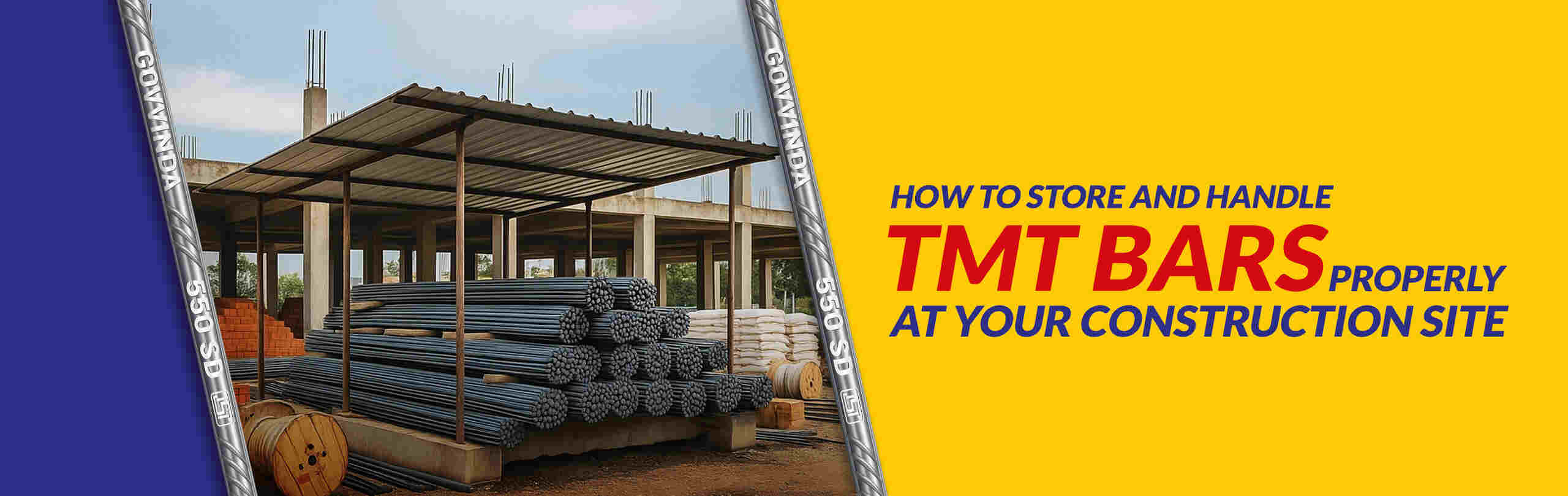
Steel and water don’t mix well. Store your TMT bars in a covered and dry location at all times. In case of open and coverless locations, you may construct a raised platform using concrete blocks or wooden planks to elevate the bars above ground. You may Cover them with waterproof sheets or tarpaulins to guard against rain or dew.
Stack Correctly
Storing bars of varying diameters separately avoids confusion in the construction process. Place them in straight layers with enough space between bundles for ventilation. Refrain from over-stacking as it may lead to bending or warping of lower layers due to pressure.
Prevention from Contact with Chemicals or Cement
Keep TMT bars separate from cement bags, lime, or other building chemicals. These items are capable of initiating chemical reactions that cause premature corrosion or surface attack.
Check for Rust Before Use
Even with careful storage, it’s a good idea to inspect your TMT bars before using them. If light rust is found, clean the surface using a wire brush. However, if the rusting is deep, it’s best not to use those bars for structural work.
Safe Handling During Construction
Use Proper Equipment
Do not drag bars across rough surfaces since this can break their ribs that are essential for concrete bonding. Lifting and moving large bundles should be done using cranes or hooks.
Cut and Bend with Care
Do not use hand bending as a means of shaping bars since it produces uneven stress or cracks in the steel, particularly around bends. Mechanical cutters and benders should be used.
Maintain Identification Tags
Good quality TMT bars, such as Govvinda TMT, tend to have batch or grade markings. Make sure these are not obliterated when being handled so you can keep track of the right grade per piece of your project.
Final Thoughts
Accurate storage and handling of TMT bars are little things that can make a huge difference in the strength, safety, and longevity of your building. Guarding your steel helps ensure that your investment in high-quality material, such as Govvinda TMT bars, really pays dividends in the long term. A solid foundation starts not only with robust materials — but with wise construction habits.